
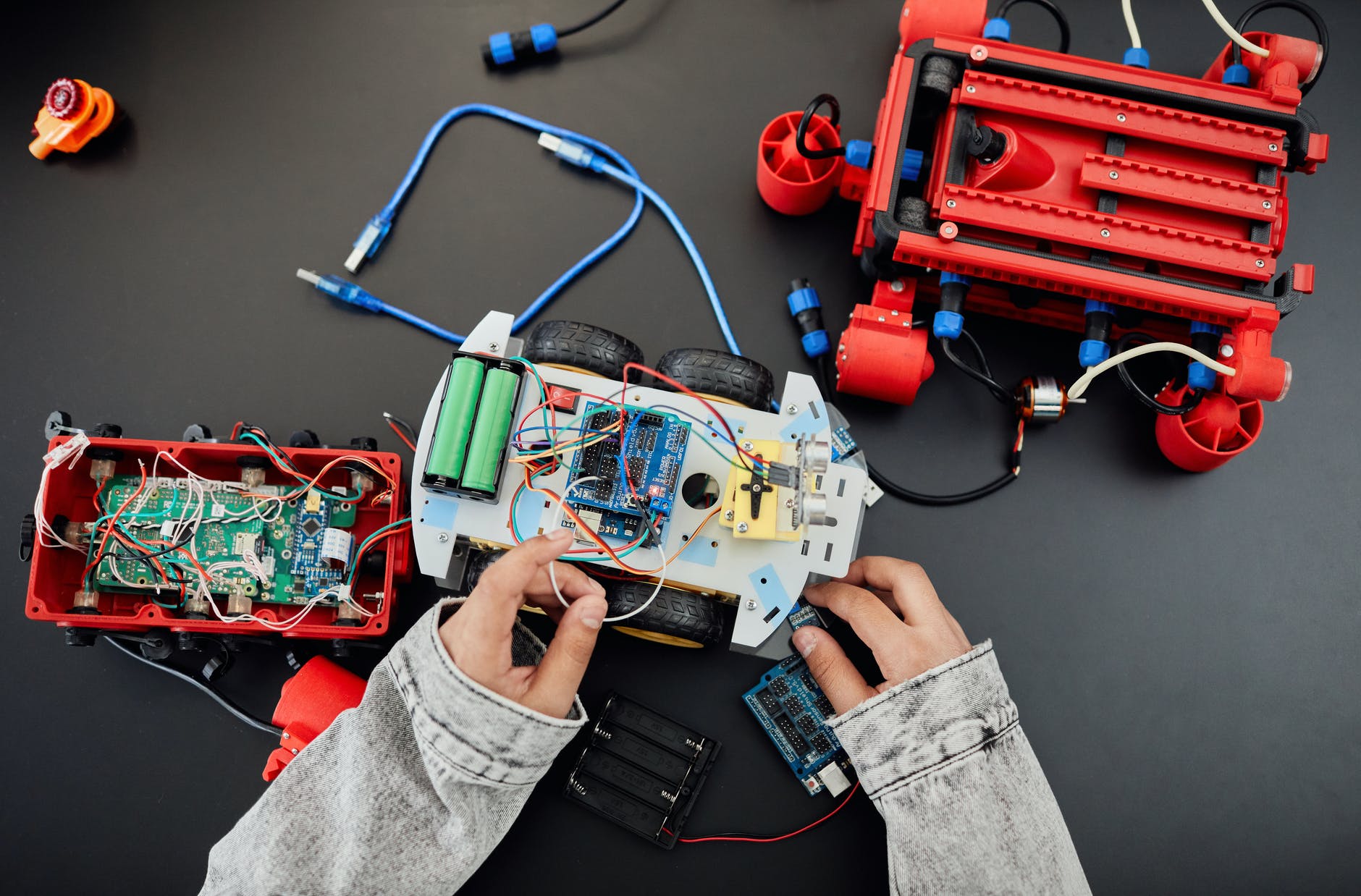
Tag: circuit

  • What circuit design issues need to be paid attention to when using PWM to control a motor?

    What circuit design issues need to be paid attention to when using PWM to control a motor?

    A common question with circuit design is “What should I pay attention to when controlling a motor with Pulse-width modulation (PWM)?”

    If you want to use PWM to control the motor action, it is generally referred to as a DC motor.

    If you want to use a relay to control it, it will definitely not work, because the round trip time of the mechanical structure is too long, as long as the frequency is high, it will not act, and the mechanical structure will be broken if the life is not high.

    In the worst case, optocoupler isolation IC+BJT should be used to amplify the current to control.

    But in fact the best choice is to use a high-power transistor (Power MOSFET) for control.

    Of course, you can choose the built-in PWM module of the motor itself. If you use a single chip to implement PWM, you need to pay attention to whether the output current of the pin is enough to drive. Generally, the traditional 8051 IC can supply 15mA, while the new Arduino can reach 20-30mA.

    When designing a PWM-controlled motor circuit with a single chip, special attention should be paid to electrical protection and power pollution issues.

    The former is because the PWM operation itself will generate a back electromotive force, which can be protected by the design of the transistor circuit.

    Power pollution is due to the current feedback from the motor startup, which may crash the chip and cause a crash, which can be protected by the circuit design of voltage regulation and power isolation.

  • What are the restrictions on the Transparency film Paper on inkjet printer and laser printer?

    What are the restrictions on the Transparency film Paper on inkjet printer and laser printer?

    A common question with schools on stage reports, design uses, and making simple circuits is about “What are the restrictions on Transparency film Paper (slideshow) plastic transparencies on inkjet printers and laser printers?”

    Although with the advent of the digital age, traditional projectors are less and less used in classroom reports or business meetings, so many young friends may not even have seen the length of the projector, but in practice there are still many places where you will use this. Kind of transparent plastic projection film.

    For example, DIY hand-made screen printing (printable T-Shirt), design and layout exhibition and window layout, and even electronic production of printed circuit boards can also be exposed to light through the output circuit diagram.

    In order to prevent this kind of useful props from becoming obsolete and losing information on how to use them, especially the key points are recorded below.

    If you want to print transparencies, you need to consider which machine you will use for output. Both inkjet printer and laser printer have their own special transparencies, including:

    The transparencies used by laser printers are simply a thin piece of PET plastic. The laser printer uses high temperature to burn the toner on the surface of the transparencies to form a pattern, which is similar to fit into the surface of the plastic layer. The binding force is high and it is not easy to disperse with one touch.

    It should be noted that some models can be set to “special mode for transparencies”. Please remember to select this mode to reduce the temperature of the toner to avoid direct softening (or even micro-melting) of the transparencies in high-end models.

    The special transparencies for inkjet printers will be covered with a special coating on one side (rough operation, visually judged), which can uniformly absorb ink molecules to form patterns and has the characteristics of speeding up drying.

    There are two points to pay attention to when using inkjet transparencies. One is that the front and back of the inkjet transparencies are different. Using the wrong side (no paint surface, smoother) will make the dye unable to be fixed, and it will be smeared off with a simple wipe; It is an inkjet transparencies. Do not use them on laser printers! Because the special coating is melted by high temperature, once it adheres to the photosensitive drum of the laser printer, it can be a lot of money to send it for repair.

    If the print volume is not large and it is only a one-time small printing demand, you can directly take it to the common photocopying shops around the university campus to output to them, avoiding the situation of buying a large package of transparent transparencies at a time but not using it up (in the drawer of the author) There is still a big bag, but it’s good to use it occasionally. It can be used to spray paint or practice drawing, which is quite useful).