
Tag: China

  • Who is the first person in the world to propose that moonlight comes from the reflection of sunlight?

    Who is the first person in the world to propose that moonlight comes from the reflection of sunlight?

    A question related to earth sciences and cosmic astronomy today is “Who is the person who first proposed in the history of the world that the moon’s lunar system comes from the sunlight (also known as sunlight) reflected from the sun?”

    “Anaxagoras”, born in Athens, ancient Greece in 500 BC, was an ancient Greek philosopher, scientist and astronomer who brought philosophy to Athens and influenced Socrates’ thought.

    Anaxagoras found that the moon is soil, closer to the ground than the sun, and has no light. Moonlight comes from the sun and is blocked by the moon to form lunar and solar eclipses. However, because his astronomy violated the religious beliefs of the Athenians at the time, he was charged with disrespect for gods.

    Therefore, the world generally believes that the first person in history to propose the theory that moonlight comes from the reflection of sunlight is the ancient Greek scientist.

    However, in a very old Chinese book on astronomy and mathematics, “Zhou Li Suan Jing”, it has actually mentioned the description of “Moonlight is born in the sun”: “The sun is like fire, the moon is like water, and fire is outside. Light and water contain the scenery, so the moonlight is born in the sun, the soul is born in the sun, the day is shining, and the sun is full. (Recorded in Erya Commentary Volume 6)”, in other words, ancient scholarship of that era The phenomenon and concept of moonlight coming from sunlight have been widely known in the world.

    Although “Zhou Ti” has no definite writing date, it is rumored that it was written by Zhou Gong, and Zhou Gong died in 1032 BC, much earlier than the time of Anaxagoras above. There is also a saying that “Zhou Tu Suan Jing” was written in the late Western Han Dynasty.

    During the Han Dynasty, there was a debate in front of the emperor. It was recorded as follows: “A famous official objected to Zhenwei, thinking that “moon light was born in the light of the moon and the sun.” It has nothing to do with the loss of the Tao,” and these contents all come from the knowledge of the ancient Scriptures scholar in the Han Dynasty, which means that the ancient texts of the Han Dynasty have shown that the moonlight comes from the sun.

    In addition, the ancient Ming character “朙” was first recorded in ancient books handed down from the Han and Song dynasties. For example, the “Hou Han Ji· Juan Shou” has written “… Zhen Yuxun’s talents, wisdom, and economics are enough to be described by Jia Shi as the great…” and other texts.

    In the book “Shuowen Jiezi” written in the Eastern Han Dynasty, the meaning of the word “朙” was taken from the moon to the 囧. The genus of all 朙 is from 朙. Ming Dynasty, the ancient literature from Japan. Wubing cut. According to the explanation of Shuowen Jiezi Annotation, “…from the moon. Those who follow the moon, the moon takes the light of the sun as the light….” It can also be found that the ancient character “朙” already has the meaning of the moon taking the sun as light. Meaning, even the ancients specially designed such an ancient word.

    To sum up, although we cannot be sure whether the actual writing date of “Zhou Tu Suan Jing” was in the Western Han Dynasty, it does not matter whether it is “Zhou” in the title of the book or Zhou Gongdan (the Zhou Dynasty politician) and Shang Gao mentioned in the article. (Mathematicians of the Western Zhou Dynasty, the study of the Pythagorean theorem was 500 to 600 years earlier than the Pythagorean theorem (also known as the Pythagorean theorem)), the names and dialogues of Rong Fang, Chen Zi, Lu, etc. can almost be It is determined that this is a piece of content that appeared more than a thousand years ago, well before the time of Anaxagoras in Athens, Greece.

    Therefore, if you want to talk about the first specific person who proposed that moonlight comes from the sun and has written records, it can barely be regarded as the Greek “Anaxagoras” in 500 BC; however, there are written records, but it is impossible to determine The earliest publication of a specific author is the Chinese “Zhou Tu Suan Jing” more than a thousand years ago.
  • Is the word "mainland" in mainland China a vague and imprecise political term?

    Is the word "mainland" in mainland China a vague and imprecise political term?

    Recently, when I spoke about the mainland word on Facebook, I have met two people who have run to question the claim that it is wrong, and even forced me to correct the use of the term Chinese only.Makes me seriously doubt that all these people's heads are mentally functional because of the stress that comes with the other side of the channel?How else do you know what I'm saying, and run and say you don't know?

    The mainland B word is an exact usage, just as you call your mum at home, and the mum next door doesn't think you're calling her.

    In addition to the substantive order defined by the clear law in our country (Continental region, mainland China mainland Chinese, mainland synonymous), the term mainland also has a very clear geographical significance for people in the island area.

    If it is geographical location, it is called Mainland, continent in English, and if it is geopolitics, it is called Motherland.In fact, it is the relative position of the relationship can be applied.For example, when I was in Tasmania, I said that the mainland, the local Aborigines also know that I am talking about Australia.Is it better for Taiwanese islanders, who claim to be 180 IQ, to be inferior to them?

    As for those who say that the mainland is very vague, the most fundamental reason is that they want the noun to blur the better, but this kind of ideological political thinking, I personally hate it.In order to insist that their ideology is in a state of trouble, and even pretending not to know the right knowledge, the result of this self-foolish fool is simply to make these people's IQ infinitely reduced.

  • The historical origin of Taiwan's unique weight unit "Taiwan Jin"

    The historical origin of Taiwan's unique weight unit "Taiwan Jin"

    Although as early as 7,000 years ago, the soil of Taiwan and mainland China was connected and the ecology was balanced, but according to the historical records of the letter, the cultural contact between Taiwan and China dates back to the Li dynasty in the early more than 1000 years.But after the Ming dynasty and the Qing Dynasty, the middle was once occupied by Japan's war as a colony, until the end of the Second World War and then returned to the hands of our Chinese nation.

    Although Japan has only occupied the island of Taiwan for about 50 years, the bloody crackdown from the early days of the Japanese army, the massacre of hundreds of thousands of dissidents and the strengthening of the Japanese imperial Education in the later period have resulted in more or less flooding of Japanese customs in various parts of Taiwan after the restoration of the people.For example, the "Taiwan Jin" commonly used in Taiwan's traditional market and tea industry is an example from the flow of Japanese militarism to this day.

    Taiwan Island in the Japanese era due to the need to transport a large number of crops to Japan, or even as Japan to launch war materiel use, thus imitating the Japanese ruler, the same Taiwan Jin "Taiwan Jin", to facilitate the many uneducated people at that time at the bottom of Taiwan to convert.After the restoration of Taiwan by the Republic of China, it acquiesced in the deep folk Taiwan Jin as a common unit of weight in Taiwan, and Kinmen and Mazu still used the official "Jin" of the Republic of China because they were not colonized by Japan.

    Jin, also known as Sima; two, also known as Sima Two, both are since ancient times since the traditional measures of quality and weight units.Originated in the Chinese Zhou Dynasty, and with the cultural thought passed on to the Korean Peninsula, Japan, Vietnam, Malay Peninsula and other places, the actual quality with the local and the Times have a slight change.At present, it is mostly the usual weight units of traditional markets and comptoirs (such as tea lines).

    In ancient China, there was an official position called "Sima", Sima mainly in charge of the military, of which because forage management needs to weigh, so "sima" and weight units on the relationship.Since the beginning of the week, China has had weight units: Jin, two, money, points, so called "Sima", "Sima two" and so on, the measurement of the tool is called "Sima Scale", this standard is also known as "Sima Ping system logo."A Sima equals 16 sima Two, the idiom "dozen" is so coming.

  • Steamed Bread Nutritional Ingredients Table

    Steamed Bread Nutritional Ingredients Table

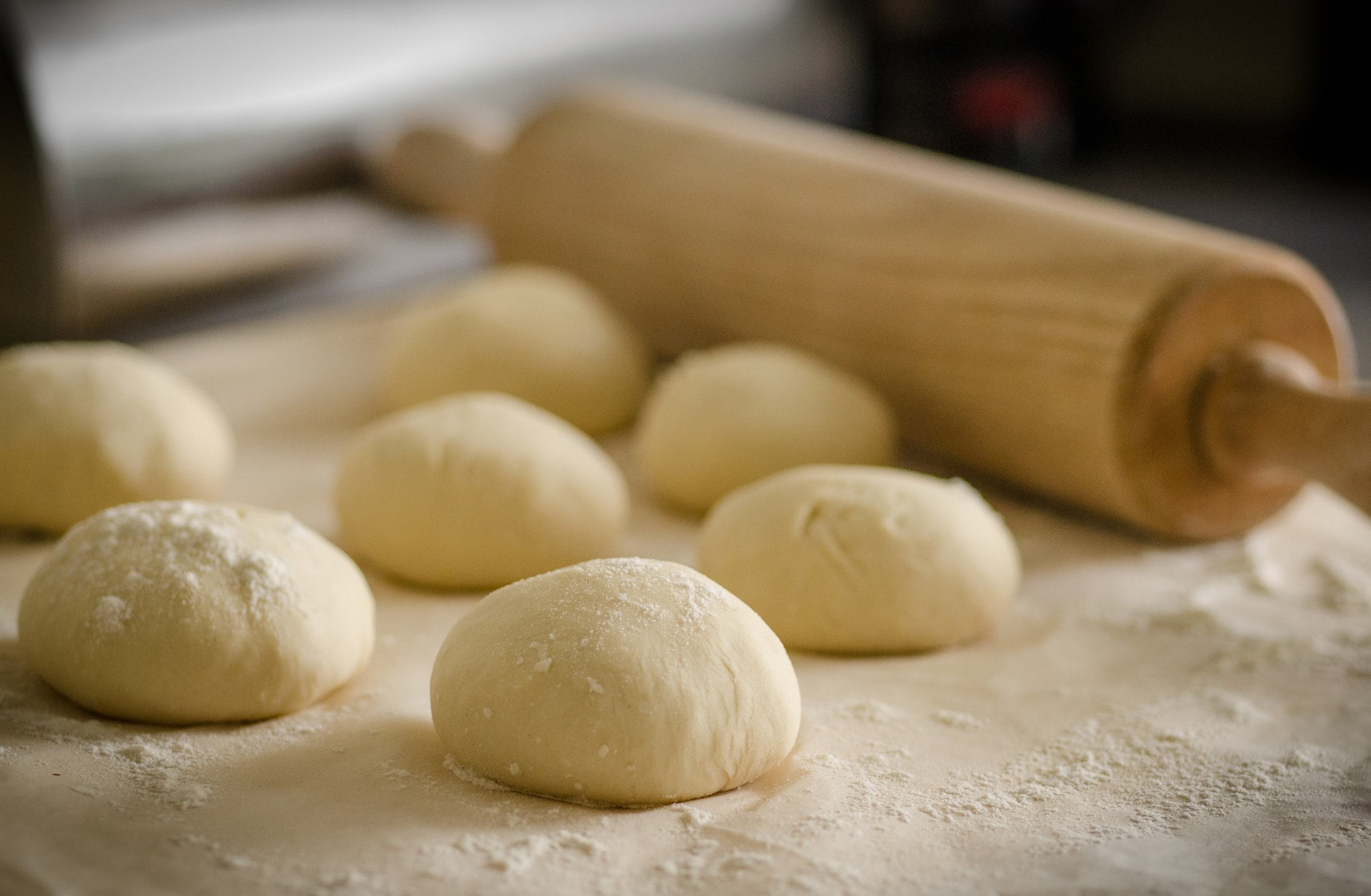
    Steamed bread is a traditional Chinese pasta, with flour and water proportionally mixed fermentation after the steamed food.North China is called Potato, Guanzhong, Zhongyuan and other places called steamed bun, Jin language, Fujian dialect area called steamed bun and so on.It is usually hemispherical, cuboid, size from about 4 cm in diameter to 15 cm in diameter Zoga.Among them, no stuffing steamed bread is the staple food of northern Chinese people, the most familiar is Shandong big steamed bread.

    Steamed Bread Nutritional Ingredients Table

    The edible part of steamed bread is 100%, and the nutrition of each 100g steamed bun is as follows:

    • Moisture: 43.9 G
    • Energy: 223 kcal
    • Protein: 7 g
    • Fat: 1.1g
    • Carbohydrates: 47.0 g
    • Insoluble fibers: 1.3g
    • Cholesterol:-
    • Ash: 1.0 g
    • Total Vitamin a:─
    • Carotene:-
    • Retinol:-
    • Thiamine: 0.04 mg
    • Riboflavin: 0.05 mg
    • Nicotinic acid (VB3):-
    • Vitamin c:─
    • Total Vitamin e:0.65 mg
    • Vitamin E (Α-E): 0.35 mg
    • Vitamin E (Β+Γ-E): 0.30 mg
    • Vitamin E (Δ-E):-
    • Calcium: $ mg
    • Phosphorus: A-. MG
    • Potassium: 138 mg
    • Sodium: 165.1 mg
    • Magnesium: MG
    • Iron: 1.8 mg
    • Zinc: 0.71 mg
    • Selenium: 8.45μg
    • Copper: 0.1 mg
    • Iron: 0.78 mg
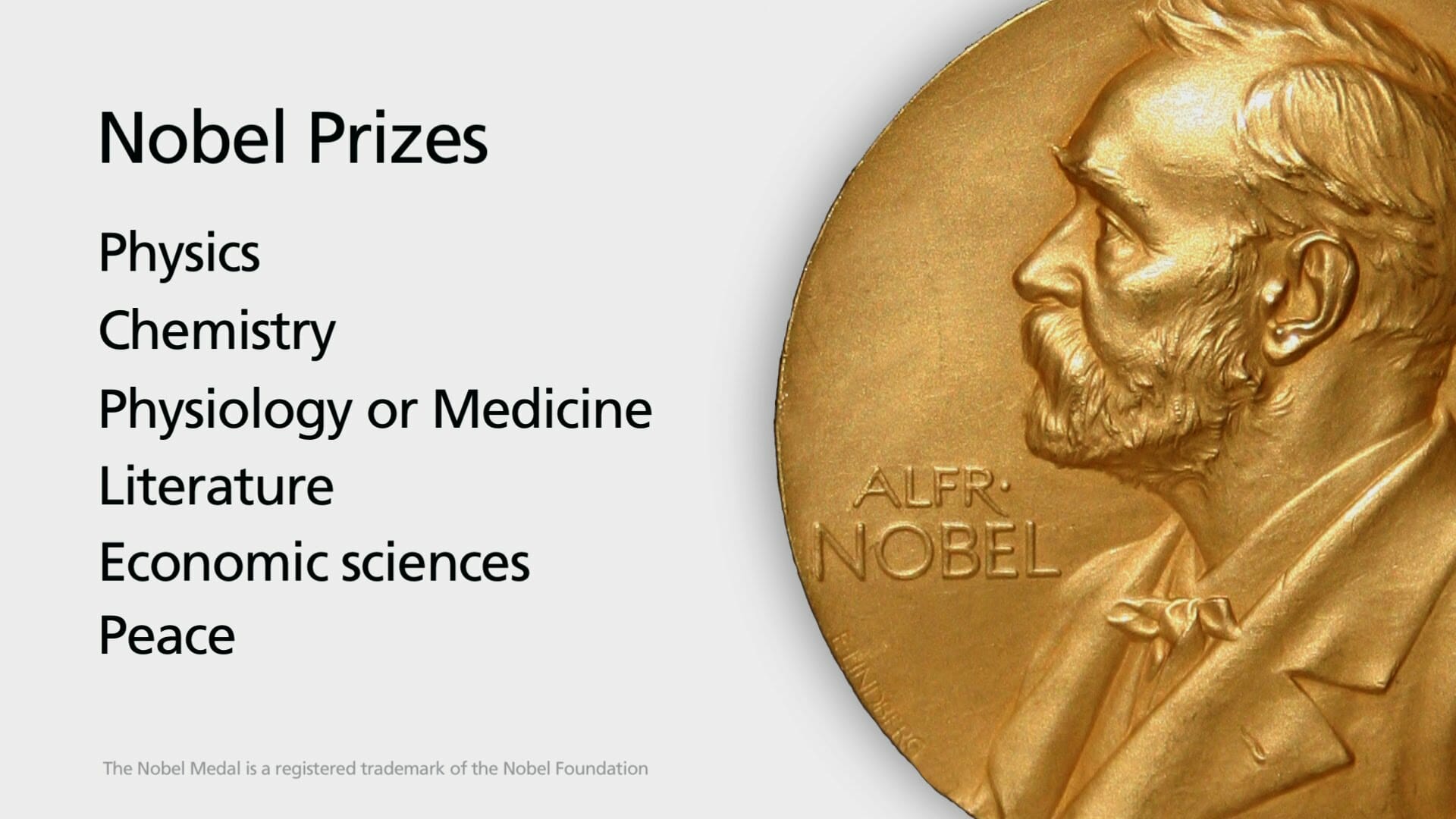
  • The Chinese struggle for the Nobel Prize

    The Chinese struggle for the Nobel Prize

    Reporter visits the leader of mainland China: "Mo Yan is the first Chinese to win a Nobel Prize?""Leadership:" Yes. " Reporter: "Has anyone in China ever won a Nobel Prize in the past?""Leadership:" Yes, but they are all foreign nationalities.」

    Ding Zhaozhong, Li Yuanzhe, Chu, Cui Qi, pearl Racing, Qian Yongjian.

    Reporter: "Are there any Chinese citizens who have won the Nobel Prize?""Leadership:" Yes, but they are all citizens of the Republic of China.」

    Li Zhengdao, Yang Zhenning.

    Reporter: "has the citizens of the People's Republic of China won the Nobel Prize?"Leadership:" There is, but he does not recognize himself as a Chinese citizen.」

    Gao Xingjian

    Reporter: "Have you admitted that you are a Chinese citizen of the People's Republic of China to take the prize?"Leadership:" Yes, but we do not recognize him as a citizen of our country.」

    Dalai Lama.

    Reporter: "Have you admitted that you are a Chinese citizen and that the state has recognized him as a winner of a Chinese citizen?""Leadership:" There is, but he's in jail.」

    Liu.

    It's not very precise, but it's also a masterpiece in terms of a joke.In fact, according to Nobel's will, the winner was not influenced by any nationality, ethnicity, ideology or religion throughout the Nobel Prize Prize, and the only criterion for selection was the size of the achievement. Therefore, the nationality of the winner is not shown on the official Nobel website, especially when the peace Prize is awarded to an international organization.Especially in the first era of globalization in late 19th century and early 20th century, at least the founders did not particularly care about nationality.